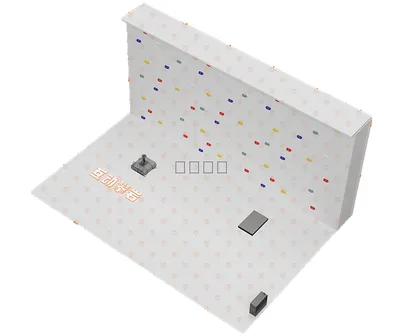
Interactive Climbing
Sensor targets and route cues are layered onto the climbing wall, scoring each climb and hit in real time to turn ascent into a measurable challenge.

Digital Sports
Digital sports halls combining interactive projection, obstacle challenges, escape rooms, strength and motion competition into scoreable, rankable interactive sports spaces for malls, resorts and study bases.
66 products
Open any product to see its features, scenarios and compliance wording.
66 product(s) match
Sensor targets and route cues are layered onto the climbing wall, scoring each climb and hit in real time to turn ascent into a measurable challenge.
Throwing becomes a scored on-screen challenge, with hits triggering visual feedback for fast, high-turnover group activity in a small space.
A line of linked obstacles forms a challenge route; players clear it in order against the clock and enter the leaderboard, ideal for in-house contests and practice.
Multi-stage levels organised by fitness dimension, progressing from strength and endurance to coordination with clear scoring throughout.
Multiple bounce surfaces form a continuous play space where free jumping can be layered with timed and scored formats, anchoring a venue's busiest fitness zone.
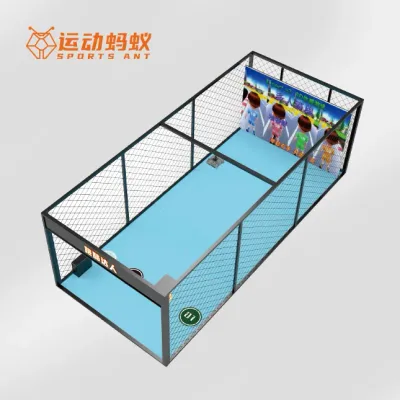
Jump, vault and balance obstacles follow parkour lines, letting athletes chain movement along a continuous route that rewards body control and rhythm.
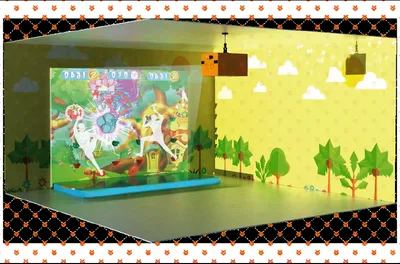
Soft-formed shapes and playful routes lower the climbing threshold, letting children explore upward at their own pace with parents close by.
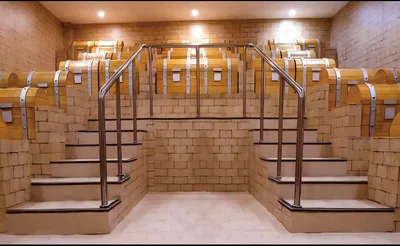
A treasure-hunt escape room where players split the work, uncover clues room by room and finish the final unlock together.
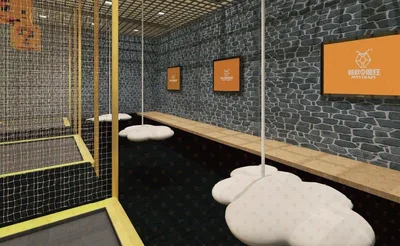
An escape game built around a rope bridge scene, where players cross a stable, lightweight bridge in turn to finish team tasks.
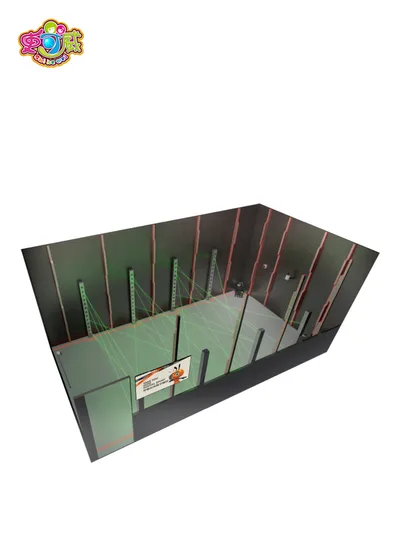
A course of low-energy light beams players navigate within a time limit, planning routes to avoid the beams and score.
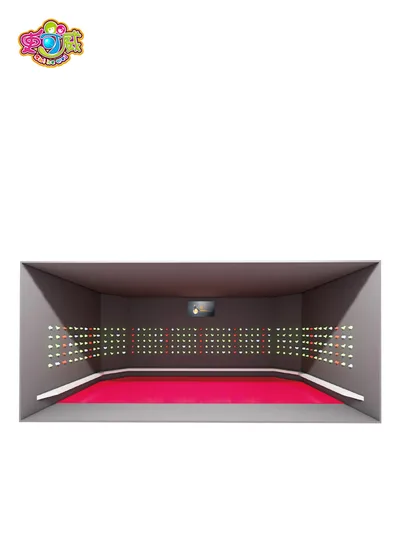
A climbing wall with graded routes and supervised protection, letting players of all levels progress at their own pace.
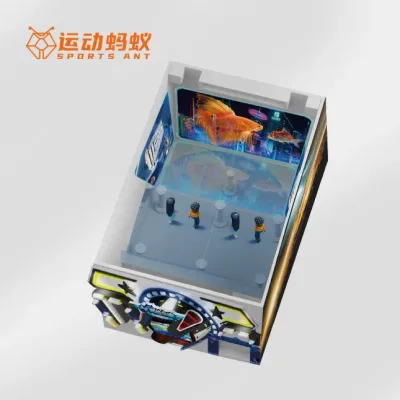
A team rope course laid out at controlled heights, where players pass the stages in sequence and complete the route through mutual support.
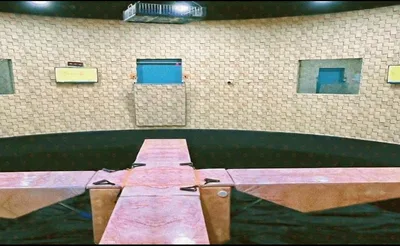
An escape room built around a mission storyline, where players gather clues and coordinate to meet the goal within the time limit.
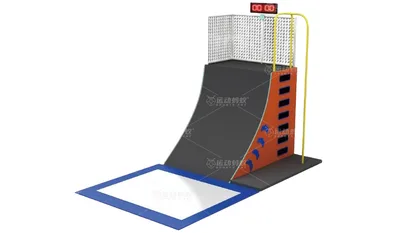
A run of wall obstacles forms a vaulting line, where athletes climb over, brace and land — the most visible strength element of a course.
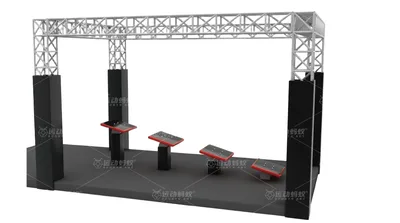
A balance board and a dome ball create unstable surfaces, challenging core control and lower-body stability while standing or moving.
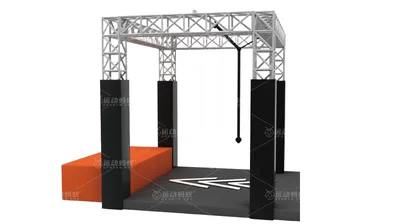
A suspended rope provides swing momentum, carrying athletes across gaps and drops as they judge timing and coordinate their body.
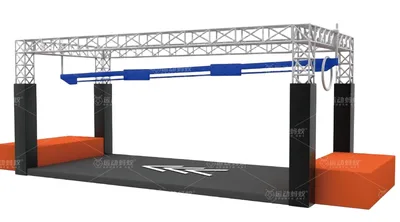
An inclined slide bar offers a descent channel: climb up, then ride down with speed and a safe landing — a rhythm shift within the course.
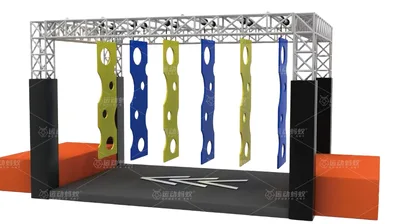
Raised grip holds on a compact panel mimic climbing points, letting athletes pull upward within a small footprint to build finger grip and upper-body support.
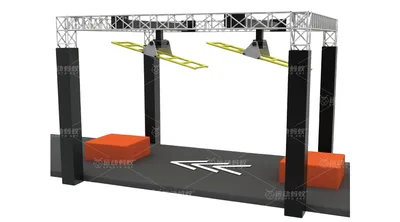
Horizontal rungs form an overhead traverse where players hang and move rung by rung, testing upper-body endurance and core stability.
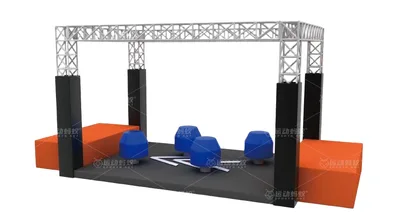
Staggered poles form a stepping route; players move from pole to pole, focusing on foot placement and balance control.
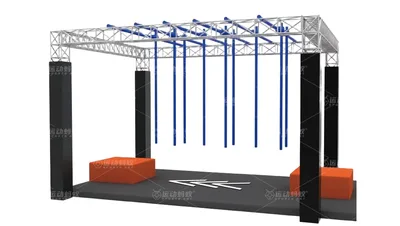
Swinging hanging bars form obstacles to pass through; players read the motion and time their move, building reaction and coordination.
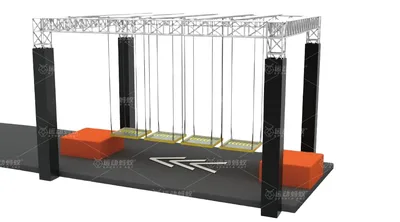
A swaying bridge deck forms a walking channel; players keep their centre of gravity while crossing, combining balance with composure.
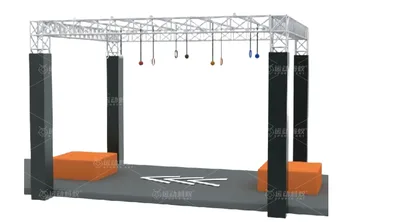
A spherical grip body serves as a swing pivot; players hold on and swing forward, testing sustained grip and swinging coordination.
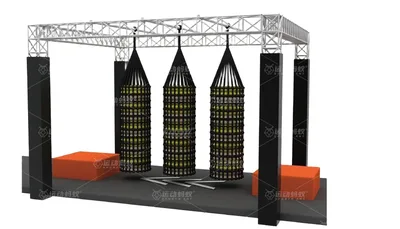
Soft foam bags act as landing cushioning and swaying obstacles, protecting jump landings while serving as a push-through stage.
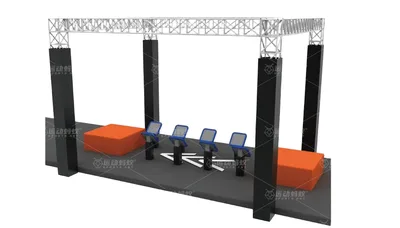
Obstacle modules are linked into a timed racing course; players run the full route against the clock with recorded results for regular contests.

Throw punches at the bag and have the force and rhythm of every strike recorded live — an honest sweat that lets stress leave through the knuckles.
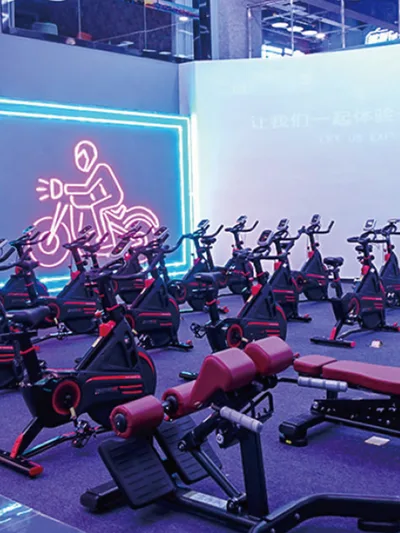
Pedal a real bike and watch the course advance with your cadence, resistance rising and falling with the terrain — a workout with something to watch.

Swing at a sensing wall and the ball rebounds as it would in a real court, with placement and speed fed back instantly — squash pace without the court.
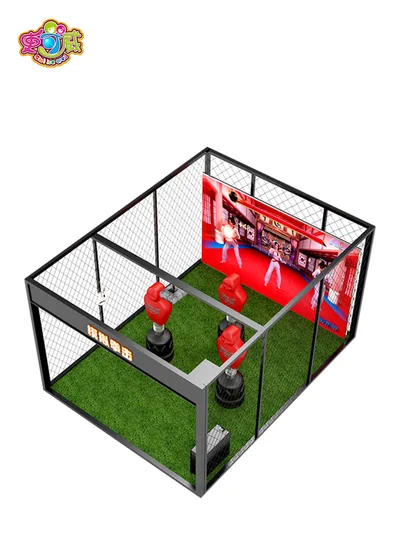
A motion-driven boxing simulator: players punch toward on-screen targets and the system responds to punch speed and placement, emphasising rhythm training and physical release.
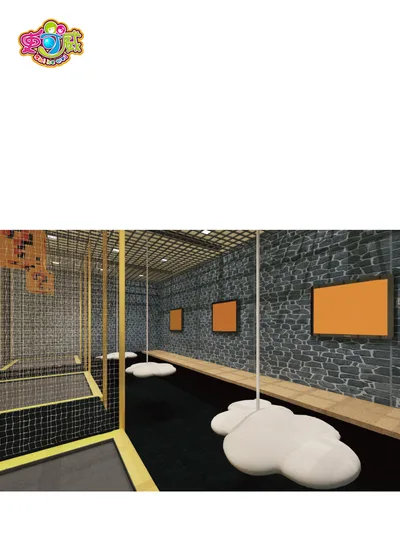
A jump-driven interactive unit: players leap inside the sensor zone and the on-screen character rises with their jump height, syncing body motion with the picture.
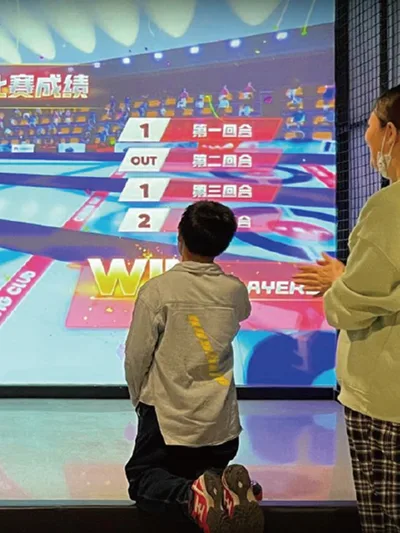
A curling interactive lane where players push the stone with controlled force and direction, while the screen lane mirrors the slide and resting point.
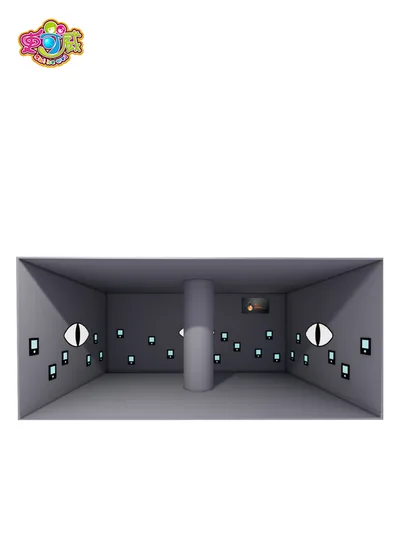
A reaction unit built around motion effort: players tap and strike toward the sensor zone, and the screen answers in rhythm and force, testing focus and timing.
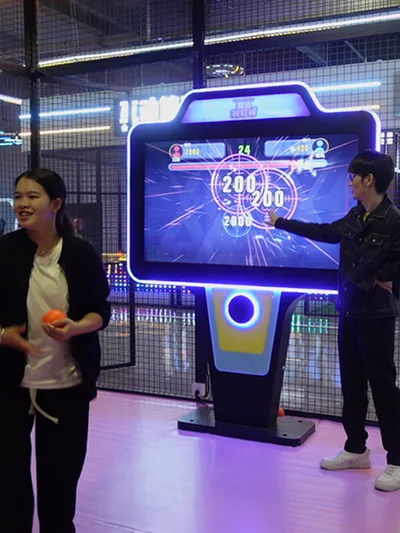
A head-to-head ball interactive: two sides take turns serving and returning, with the screen judging contact and points for fast matches and quick rotation.
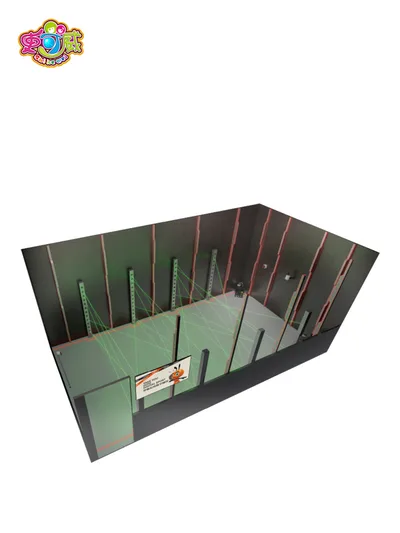
An interactive matrix built from laser beams and sensor nodes: players weave and dodge between beams while touch judging and route guidance appear on screen.
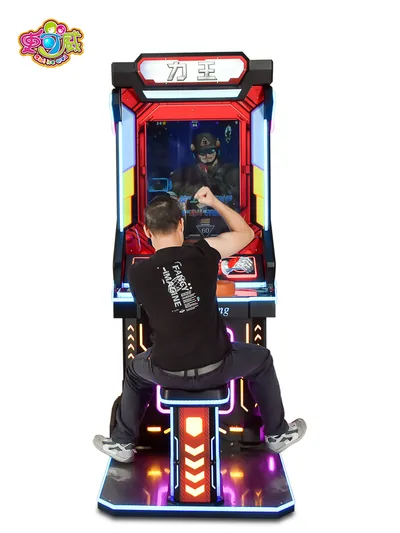
A strength challenge attraction where pushing or pulling outputs force, with the screen scoring peak power and sustained duration.
An interactive attraction themed on cube stacking, where players move physical blocks across a projection area while the screen judges completion.
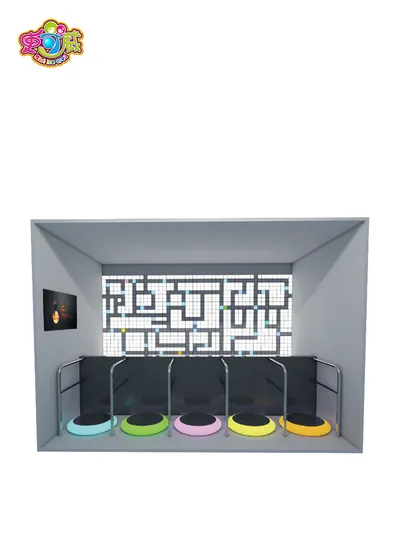
A comprehensive motion attraction combining running, jumping, swinging and kicking into levels, built for all-age short challenges.
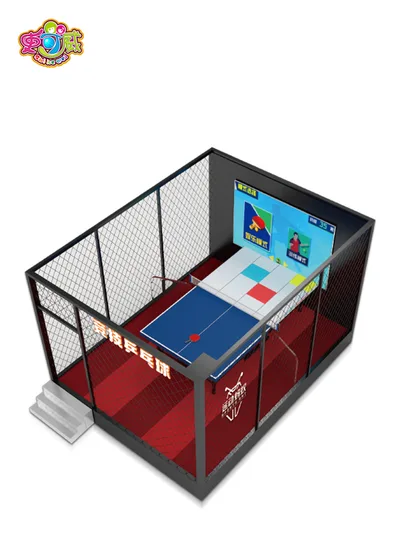
A motion attraction in table tennis form, pairing a real paddle with projected returns, with landing and spin inferred from the swing.

An immersive passage themed on travelling through time, where light and shadow shift with movement — suited to family and experiential settings.
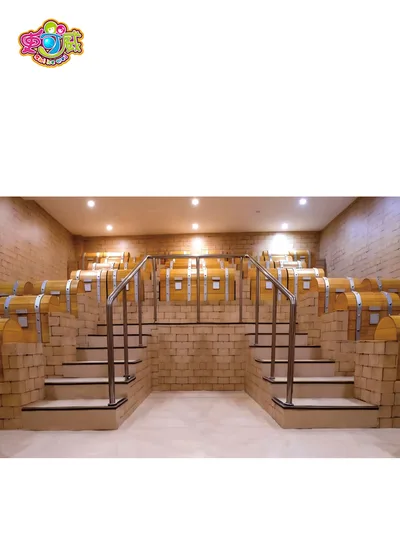
A motion challenge attraction led by a treasure hunt, where players complete action tasks to advance — suited to team and family co-operation.
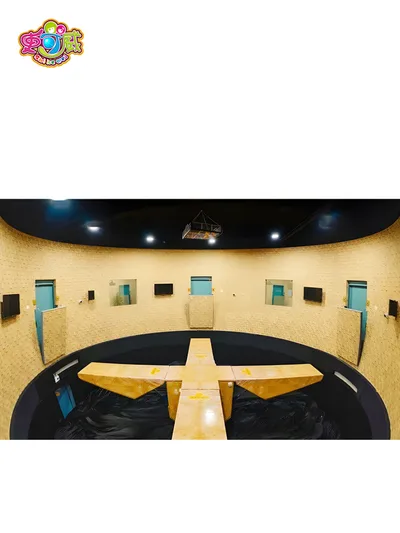
A motion-interactive escape challenge where scene mechanisms trigger through movement, requiring a team to solve clues within the time limit.
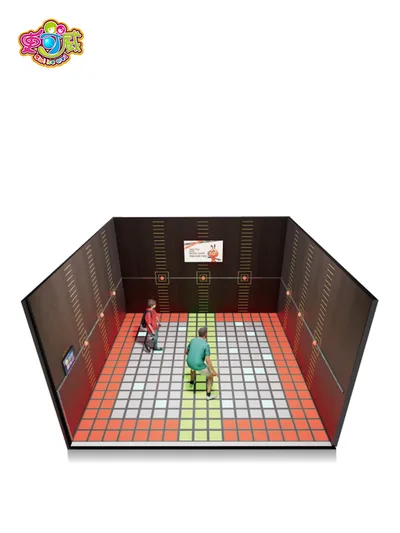
An interactive unit of sensor cubes whose combinations change the visuals and rules, letting players arrange them by hand while the system judges instantly.
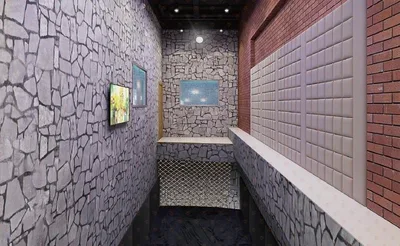
An escape-room theme built around a cliff landscape, where players search a three-dimensional set for clues and work together to finish the challenge within the time limit.
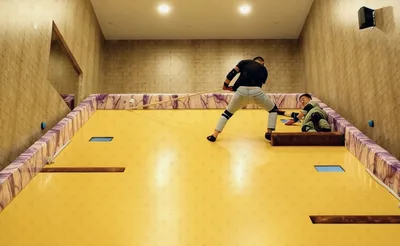
An escape-room theme centred on stone-slab mechanisms: players read the set and try combinations to trigger the mechanisms, then solve their way out within the time limit.
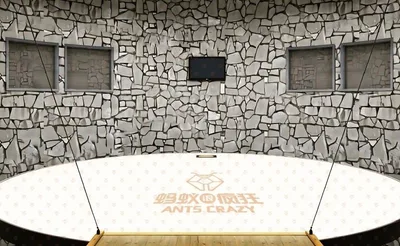
An escape-room theme built around a rotating stone disc: players must read the mechanism pattern and turn it together to open the way out before time runs out.
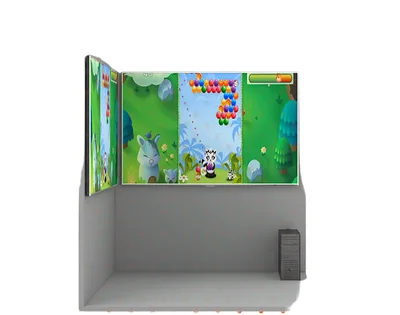
A multi-stage escape challenge: teams work through puzzles, searches and cooperation tasks against the clock, advancing stage by stage until they clear the room.
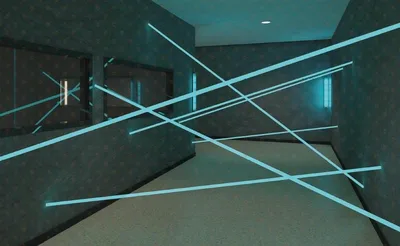
An escape-room theme built around a laser grid: players move through or around the beams within the time limit, completing tasks along the way to get out.
The whole floor becomes a projected playfield where stepping, chasing and dodging are sensed for many participants at once.
Projection on a wall turns taps, throws and touches into on-screen reactions, letting a single wall carry the interaction.
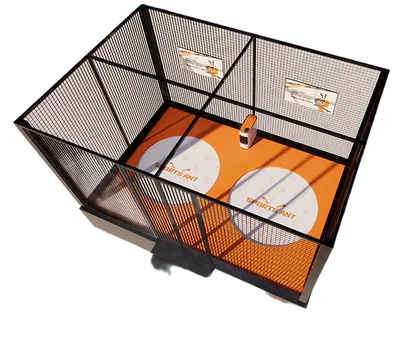
Games are projected onto the trampoline surface, with motion capture at the core alongside AR and a 3D game engine, so every bounce triggers an in-game response and play doubles as exercise. Multiple games are built in and can loop.
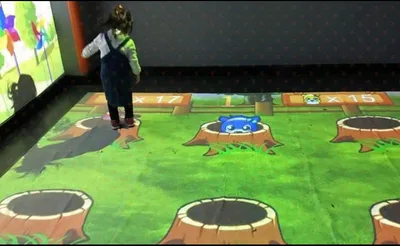
Projection covers the whole floor and responds to every step, pairing light with sensing for open areas that draw crowds and set the mood.
Holographic imaging floats imagery on stage and layers it with live performance or speeches, giving launches and shows a future-facing look.
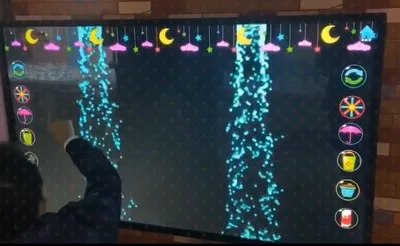
Walls become touchable canvases that respond to waving and approach, quietly activating corridors, galleries and waiting areas.
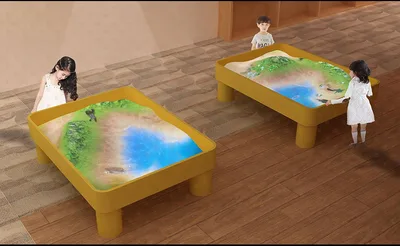
A physical sandbox hosts terrain projection: piling and digging generate hills and water in real time, turning geography into hands-on exploration.
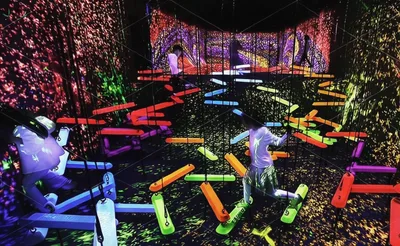
Synchronised projection across walls and floor creates a seamless immersive room that envelops visitors, suited to narrative shows and themed exhibitions.
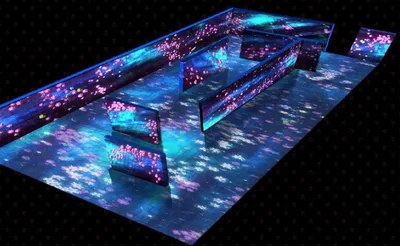
Holographic imaging presents floating exhibits and information with touch browsing, giving displays depth in a compact footprint.

A real sand pit paired with multimedia projection: virtual scenes appear on the sand surface, and children take part by hand or with props in fishing, clean-up and feeding tasks.
Rainbow projection slide lays interactive visuals along the slide: the scene changes as children glide, with audio-visual feedback and multi-player turns.
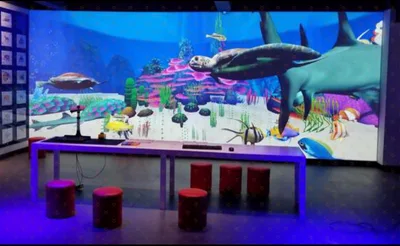
Magic drawing wall projects children's artwork onto the wall instantly, with sensor interaction capturing every stroke and a viral interactive photo spot.
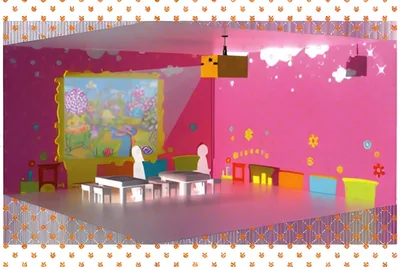
Touch graffiti lets visitors paint straight on screen: sensor interaction captures strokes, with customizable themes and one-tap projection display.
Cool projection zone centers on an interactive projection floor: scenes follow every step, with sensor zones and audio-visual feedback for group chase play.
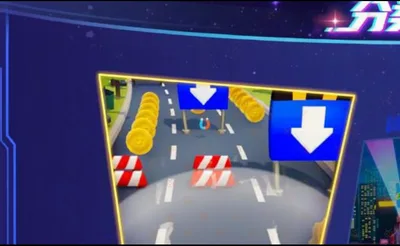
Motion Star pairs projection interaction with motion sensing: real-time motion capture, scoring and rankings for multi-player competition.
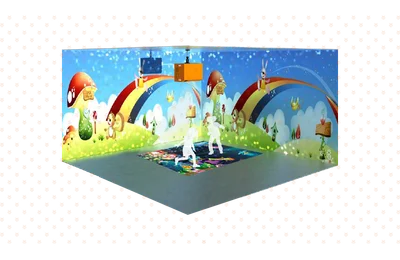
Projection bowling recreates the game on a projected lane: instant throw detection and scoring with interactive feedback and multi-player matches.

Magic music wall hides a note behind every panel: touch to play, with lighting ambience pulsing to the beat and layered audio-visual feedback.
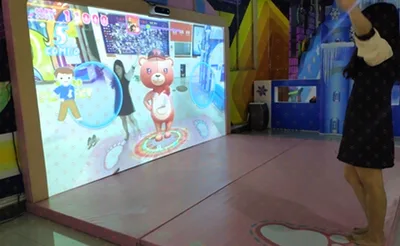
Dance Baby turns dancing into a challenge game: tiered difficulty, plus lighting ambience and audio-visual feedback that pulse with the beat.
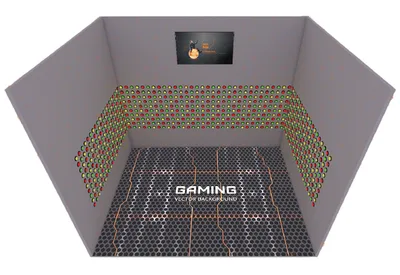
Extreme Challenge turns obstacle runs into competition: multi-round challenges with tiered levels, motion-sensor judging and multi-player speed races.
The questions we hear most about site conditions, configuration and after-sales in this category.
Yes. Multiplayer, scoring and level mechanics are designed to be timed and ranked; turnkey delivery adds zoning and an event calendar for team-building and seasonal competitions.
Yes. A common route opens a core zone first to validate footfall, then adds points based on the data; the first phase already leaves room for expansion in both site and circulation.
Investment breaks into four parts: equipment, fit-out, rent and working capital. We don't quote a figure before seeing your site; we first lay out the structure and share of each part against your venue and goals, then move into proposal modelling.
A single unit typically occupies 30-150 m² and a full venue usually starts at several hundred m²; ceiling height and structure depend on the equipment you choose. We carry out an on-site survey and match the proposal to the measured dimensions and structural conditions.
Equipment carries a one-year warranty and we keep common spare parts in stock. Faults are diagnosed remotely first, then we decide whether to dispatch on-site or replace, keeping downtime to a minimum.
Yes. Turnkey delivery already includes staff training and operations support, joined up from pre-opening to day-to-day running; we agree who does what first, then proceed.
Four things are enough: your city, venue area, budget band and planned opening date. With these we set the direction first, then book the on-site survey and proposal.
Yes. A common approach is to open the core area first to validate footfall, then expand points of attraction in stages based on the data, reducing the upfront outlay and trial-and-error cost.
Yes. Our equipment reaches 38 countries and regions, and overseas projects are delivered and maintained through our existing sales network and remote diagnostics.
We are a source manufacturer and turnkey delivery partner: we develop and produce the equipment ourselves, and planning, design, construction and operations are joined up by one team, not just selling single units for you to compare and assemble yourself.
Turnkey delivery covers planning and design: we lay out circulation against the site conditions and target audience, propose the attraction mix with design visuals, and only after alignment move to equipment and construction. The visuals support layout discussions and defer to the on-site survey and final drawings.
Usually yes. Ceiling height, columns and irregular shapes drive equipment choice: height-limited spots switch to compact units, columns are worked around with aisles and low-profile attractions, and awkward corners are handed to adaptable projection and sensing products. The mix is set from the measured results of the on-site survey.
Delivery is staged by attraction: site works and equipment installation run in sequence, and each item is commissioned and accepted rather than every unit arriving at once. Installation and commissioning are handled by the relevant team, with front-line staff trained on operation and safety at the same time.
We provide the method, not a substitute for your operation: membership tiers and points mechanics, a yearly campaign schedule, and a floor-check and review rhythm can all be designed alongside. After delivery we review footfall and attraction performance by cycle and adjust on the data, with the rollout split by agreed responsibilities.
Yes. Projection, sensing and VR attractions refresh their content through software, so gameplay packs can change with seasons or themes. Hardware points are adjusted or added based on operating data rather than filled in one go. We recommend piloting a new format on a small scale, fixing what surfaces, then opening it fully.
Faults are diagnosed remotely first; what can be resolved remotely is handled there, and only what needs an on-site visit gets an engineer and parts dispatched. Common spares are kept in stock to keep downtime short, while daily floor checks close site issues within the week rather than at month end.
We organise documents to your target market: products are always described as designed to the relevant standard, and any qualification, test or compliance documents we can provide are the registered originals. Tell us your market and product scope and we reply with the list of documents we can supply within the committed window.
A standard attraction mix forms the base, with counts and proportions tuned to each site while configuration and operating practice stay consistent. Headcount planning, layered training and an asset library replicate the service standard across new sites and new staff, and the floor-check and review rhythm carries it into daily practice.
After you leave a contact, we deliver the proposal and configuration within the agreed window.
66 product(s) match
Sensor targets and route cues are layered onto the climbing wall, scoring each climb and hit in real time to turn ascent into a measurable challenge.
Throwing becomes a scored on-screen challenge, with hits triggering visual feedback for fast, high-turnover group activity in a small space.
A line of linked obstacles forms a challenge route; players clear it in order against the clock and enter the leaderboard, ideal for in-house contests and practice.
Multi-stage levels organised by fitness dimension, progressing from strength and endurance to coordination with clear scoring throughout.
Multiple bounce surfaces form a continuous play space where free jumping can be layered with timed and scored formats, anchoring a venue's busiest fitness zone.
Jump, vault and balance obstacles follow parkour lines, letting athletes chain movement along a continuous route that rewards body control and rhythm.
Soft-formed shapes and playful routes lower the climbing threshold, letting children explore upward at their own pace with parents close by.
A treasure-hunt escape room where players split the work, uncover clues room by room and finish the final unlock together.
An escape game built around a rope bridge scene, where players cross a stable, lightweight bridge in turn to finish team tasks.
A course of low-energy light beams players navigate within a time limit, planning routes to avoid the beams and score.
A climbing wall with graded routes and supervised protection, letting players of all levels progress at their own pace.
A team rope course laid out at controlled heights, where players pass the stages in sequence and complete the route through mutual support.
An escape room built around a mission storyline, where players gather clues and coordinate to meet the goal within the time limit.
A run of wall obstacles forms a vaulting line, where athletes climb over, brace and land — the most visible strength element of a course.
A balance board and a dome ball create unstable surfaces, challenging core control and lower-body stability while standing or moving.
A suspended rope provides swing momentum, carrying athletes across gaps and drops as they judge timing and coordinate their body.
An inclined slide bar offers a descent channel: climb up, then ride down with speed and a safe landing — a rhythm shift within the course.
Raised grip holds on a compact panel mimic climbing points, letting athletes pull upward within a small footprint to build finger grip and upper-body support.
Horizontal rungs form an overhead traverse where players hang and move rung by rung, testing upper-body endurance and core stability.
Staggered poles form a stepping route; players move from pole to pole, focusing on foot placement and balance control.
Swinging hanging bars form obstacles to pass through; players read the motion and time their move, building reaction and coordination.
A swaying bridge deck forms a walking channel; players keep their centre of gravity while crossing, combining balance with composure.
A spherical grip body serves as a swing pivot; players hold on and swing forward, testing sustained grip and swinging coordination.
Soft foam bags act as landing cushioning and swaying obstacles, protecting jump landings while serving as a push-through stage.
Obstacle modules are linked into a timed racing course; players run the full route against the clock with recorded results for regular contests.
Throw punches at the bag and have the force and rhythm of every strike recorded live — an honest sweat that lets stress leave through the knuckles.
Pedal a real bike and watch the course advance with your cadence, resistance rising and falling with the terrain — a workout with something to watch.
Swing at a sensing wall and the ball rebounds as it would in a real court, with placement and speed fed back instantly — squash pace without the court.
A motion-driven boxing simulator: players punch toward on-screen targets and the system responds to punch speed and placement, emphasising rhythm training and physical release.
A jump-driven interactive unit: players leap inside the sensor zone and the on-screen character rises with their jump height, syncing body motion with the picture.
A curling interactive lane where players push the stone with controlled force and direction, while the screen lane mirrors the slide and resting point.
A reaction unit built around motion effort: players tap and strike toward the sensor zone, and the screen answers in rhythm and force, testing focus and timing.
A head-to-head ball interactive: two sides take turns serving and returning, with the screen judging contact and points for fast matches and quick rotation.
An interactive matrix built from laser beams and sensor nodes: players weave and dodge between beams while touch judging and route guidance appear on screen.
A strength challenge attraction where pushing or pulling outputs force, with the screen scoring peak power and sustained duration.
An interactive attraction themed on cube stacking, where players move physical blocks across a projection area while the screen judges completion.
A comprehensive motion attraction combining running, jumping, swinging and kicking into levels, built for all-age short challenges.
A motion attraction in table tennis form, pairing a real paddle with projected returns, with landing and spin inferred from the swing.
An immersive passage themed on travelling through time, where light and shadow shift with movement — suited to family and experiential settings.
A motion challenge attraction led by a treasure hunt, where players complete action tasks to advance — suited to team and family co-operation.
A motion-interactive escape challenge where scene mechanisms trigger through movement, requiring a team to solve clues within the time limit.
An interactive unit of sensor cubes whose combinations change the visuals and rules, letting players arrange them by hand while the system judges instantly.
An escape-room theme built around a cliff landscape, where players search a three-dimensional set for clues and work together to finish the challenge within the time limit.
An escape-room theme centred on stone-slab mechanisms: players read the set and try combinations to trigger the mechanisms, then solve their way out within the time limit.
An escape-room theme built around a rotating stone disc: players must read the mechanism pattern and turn it together to open the way out before time runs out.
A multi-stage escape challenge: teams work through puzzles, searches and cooperation tasks against the clock, advancing stage by stage until they clear the room.
An escape-room theme built around a laser grid: players move through or around the beams within the time limit, completing tasks along the way to get out.
The whole floor becomes a projected playfield where stepping, chasing and dodging are sensed for many participants at once.
Projection on a wall turns taps, throws and touches into on-screen reactions, letting a single wall carry the interaction.
Games are projected onto the trampoline surface, with motion capture at the core alongside AR and a 3D game engine, so every bounce triggers an in-game response and play doubles as exercise. Multiple games are built in and can loop.
Projection covers the whole floor and responds to every step, pairing light with sensing for open areas that draw crowds and set the mood.
Holographic imaging floats imagery on stage and layers it with live performance or speeches, giving launches and shows a future-facing look.
Walls become touchable canvases that respond to waving and approach, quietly activating corridors, galleries and waiting areas.
A physical sandbox hosts terrain projection: piling and digging generate hills and water in real time, turning geography into hands-on exploration.
Synchronised projection across walls and floor creates a seamless immersive room that envelops visitors, suited to narrative shows and themed exhibitions.
Holographic imaging presents floating exhibits and information with touch browsing, giving displays depth in a compact footprint.
A real sand pit paired with multimedia projection: virtual scenes appear on the sand surface, and children take part by hand or with props in fishing, clean-up and feeding tasks.
Rainbow projection slide lays interactive visuals along the slide: the scene changes as children glide, with audio-visual feedback and multi-player turns.
Magic drawing wall projects children's artwork onto the wall instantly, with sensor interaction capturing every stroke and a viral interactive photo spot.
Touch graffiti lets visitors paint straight on screen: sensor interaction captures strokes, with customizable themes and one-tap projection display.
Cool projection zone centers on an interactive projection floor: scenes follow every step, with sensor zones and audio-visual feedback for group chase play.
Motion Star pairs projection interaction with motion sensing: real-time motion capture, scoring and rankings for multi-player competition.
Projection bowling recreates the game on a projected lane: instant throw detection and scoring with interactive feedback and multi-player matches.
Magic music wall hides a note behind every panel: touch to play, with lighting ambience pulsing to the beat and layered audio-visual feedback.
Dance Baby turns dancing into a challenge game: tiered difficulty, plus lighting ambience and audio-visual feedback that pulse with the beat.
Extreme Challenge turns obstacle runs into competition: multi-round challenges with tiered levels, motion-sensor judging and multi-player speed races.